

Google’s Universal Commerce Protocol: What It Could Mean for Travel Marketing
Google recently pulled back the curtain on its Universal Commerce Protocol (UCP) — a new open framework designed to help AI agents discover, compare, and complete purchases seamlessly. While the announcement focused largely on retail, the implications for travel and tourism are worth paying attention to.
Here’s the short version: UCP is about making commerce easier for AI. And AI is quickly becoming how travelers plan, decide, and book.
Why Travel Marketers Should Care
Travel planning has never been simple. Flights, hotels, experiences, upgrades, transportation — often spread across multiple platforms and tabs. UCP points toward a future where AI assistants can manage that complexity in one continuous flow, from inspiration to booking.
That shift could mean:
-
Fewer steps between intent and conversion
-
More bundled, end-to-end trip planning
-
Less dependence on traditional click-through journeys
In short, the path to booking gets faster — and more conversational.
What This Signals for Travel Marketers
UCP reinforces a trend we’re already seeing: discovery is moving beyond search bars and into AI-driven experiences. As AI-driven discovery evolves, visibility shifts toward being structured, accessible, and ready for AI-led action.
That raises some important questions:
-
Can AI easily understand and recommend your destination or experiences?
-
Is your content built for machine-led discovery, not just human browsing?
-
What happens when trip planning starts with a prompt instead of a webpage?
The Takeaway
UCP isn’t something travel brands need to implement tomorrow — but it is a signal. Google is clearly investing in a future where AI doesn’t just influence purchases, it executes them. Travel is a natural next frontier.
The destinations and brands that start preparing now will be better positioned as discovery, decision-making, and booking continue to converge.
TL;DR: AI is moving from “help me plan” to “book it for me.” UCP is Google’s step in that direction — and a reminder that travel marketing needs to be built for AI discovery, not just clicks.
👉 Let’s talk about how your destination shows up when travelers plan with AI.
Learn more about how we can help you adapt to the evolving marketing landscape and ramp up your efforts.
October 22, 2026
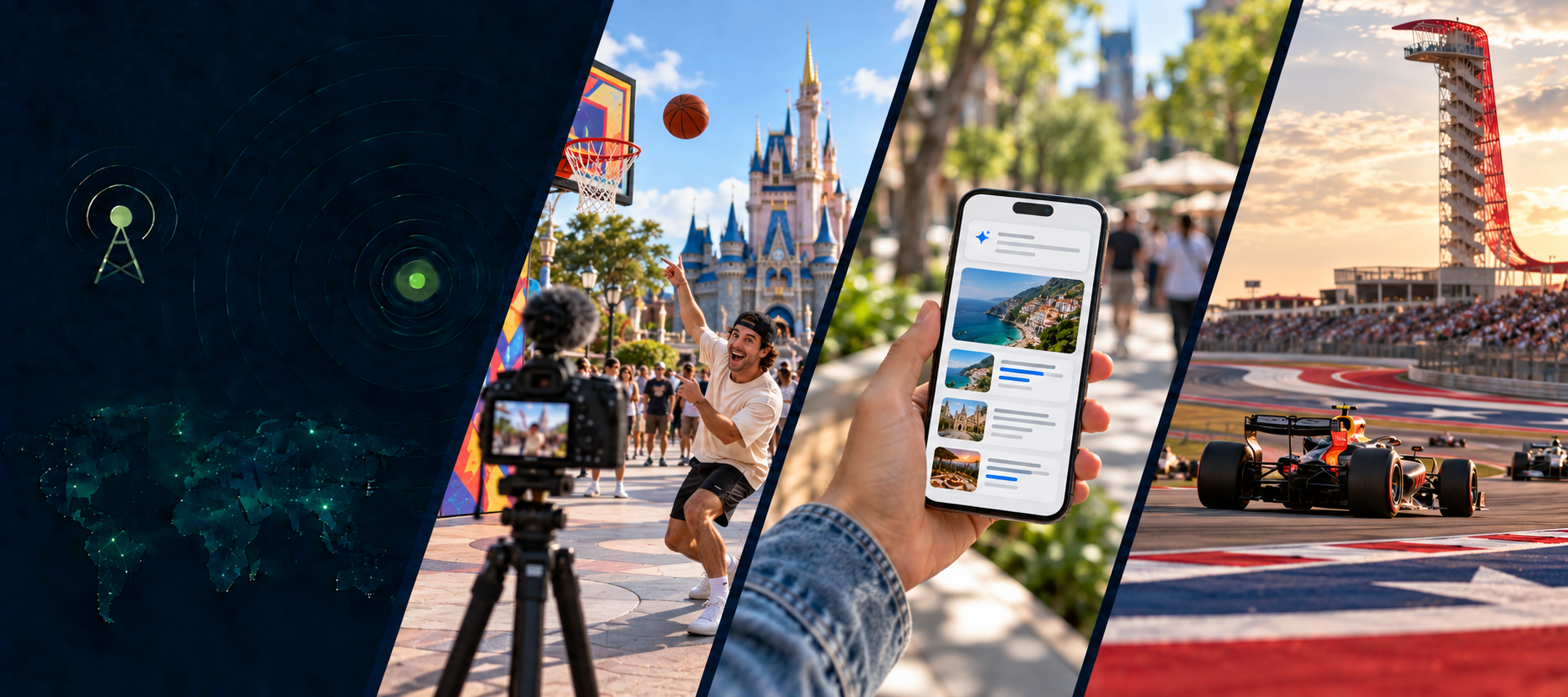
This week on Travel Signals, Disney is building around a creator’s established appeal. Google is making sources more visible inside AI answers. And Apple Maps is helping visitors find their way through one of Austin’s biggest weekends.
October 19, 2026

What a hometown concert, a marathon, and nearly 200,000 event attendees can teach us about what makes a destination worth visiting. On a moonlit Saturday evening, cool fall air chilled the 102,000 fans waiting for Twenty One Pilots to begin their largest and longest show to date. Suddenly, Ohio Stadium exploded in a wash of red as every screen and every [...]
October 15, 2026

The future of travel marketing isn't about creating more content. It's about creating something AI can't reproduce without you. There is a fundamental problem emerging in travel marketing, and it has very little to do with whether you're using ChatGPT, Gemini, Claude, or whatever new AI product showed up while I was writing this sentence. The problem is that we have [...]

 Ad Choices