

Why Google’s SEO/AI Optimization Guide Is Really About Escaping Commodity Content
For the last two years, perhaps marketers have been asking the same question:
“How do we optimize for AI search?”
Google just answered that question with unusual clarity.
It is editorial.
In its new guide on optimizing for generative AI features, Google repeatedly emphasizes something that should make every content marketer slightly uncomfortable:
Non-commodity content.
For years, SEO rewarded scale. Publish enough “Top 10 Tips” articles, structure them properly, and eventually traffic arrived. But AI-generated search changes the economics of visibility because retrieval systems do not need another generic explanation of a topic. They already have infinite access to mediocre
AI systems retrieve what is distinctive.
Google’s own example in the documentation is telling. Commodity content looks like:
“7 Tips for First-Time Homebuyers.” In travel this might be “Top 10 restaurants to try this Fall.”
Non-commodity content looks like:
“I drove 1200 miles across Michigan looking for the perfect fall meal, these three restaurants stuck with me”
The difference is not formatting or schema.
It is specificity, dare we say humanity.
One article could be written by anyone with access to a chatbot. The other requires experience, consequence, narrative, and perspective.
That distinction is becoming foundational because AI search is built on retrieval-augmented generation (RAG). These systems pull from indexed content to construct answers. If your content simply reorganizes common knowledge, the model has no compelling reason to surface your version over thousands of others saying the same thing.
This is why so much AI-generated content already feels invisible.
The internet is entering a phase where production is cheap, but perspective is expensive.
That changes the value for most marketers.
That means:
-
First-party observations
-
Original research
-
Operational insights
-
Real customer stories
-
Contrarian points of view
-
Specific failures
-
Specific outcomes
-
Human judgment
In other words, the things most AI-generated content is structurally weak at producing authentically.
This is also why Google’s guide spends time myth-busting tactics marketers hoped would become shortcuts.
That is Google effectively saying: Stop trying to reverse-engineer the machine and start becoming a source worth reading.
There is a broader implication here for brands.
For years, content strategy was built around discoverability after intent formed. Someone searched, brands competed, and traffic followed.
AI compresses that journey.
Now recommendations, summaries, and comparisons increasingly happen in a zero click environment. That means visibility itself becomes the product.
And visibility in AI systems is heavily influenced by whether your content contributes something additive to the travelers digital experience
The organizations that will win in AI-mediated discovery are the ones capable of producing:
-
recognizable expertise
-
repeated perspective
-
clear narrative territory
-
and consistent signals across platforms
Because retrieval systems prioritize information gain.
That is the part many marketers are still missing.
The future of SEO is not less human. It is more human in ways that are difficult to automate.
The irony is almost perfect.
The easier AI makes content creation, the more valuable actual experience becomes.
And this has major consequences for how teams should operate.
Writers become interviewers.
Subject matter experts become strategic assets.
Customers become citation material.
Podcasts become source inventory.
Internal conversations become content goldmines.
The organizations still treating content like a volume game are going to flood the internet with increasingly interchangeable material while wondering why visibility declines.
Meanwhile, smaller brands with sharper perspectives will punch above their weight because they are producing things AI systems cannot easily synthesize elsewhere.
The future belongs to brands that can say something only they can say.
Learn more about how we can help you adapt to the evolving marketing landscape and ramp up your efforts.
October 22, 2026
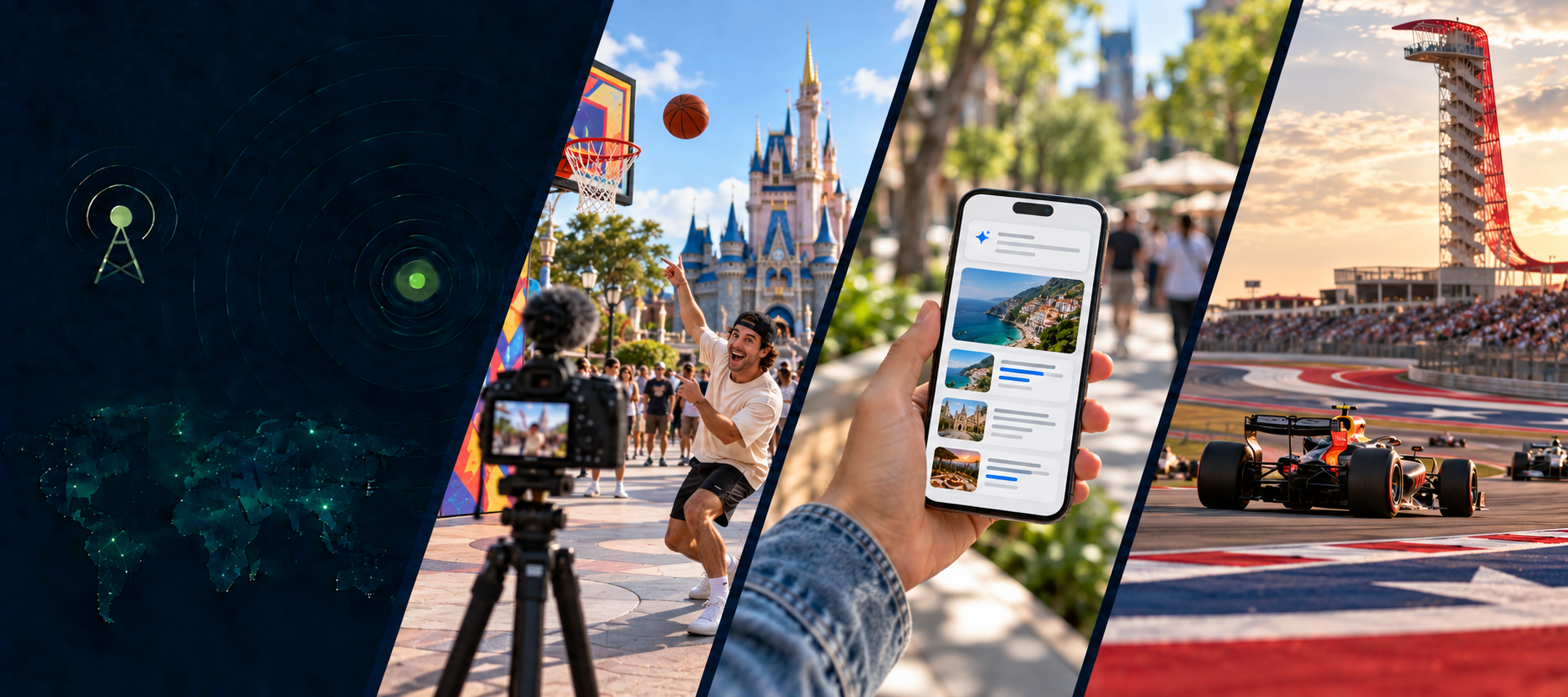
This week on Travel Signals, Disney is building around a creator’s established appeal. Google is making sources more visible inside AI answers. And Apple Maps is helping visitors find their way through one of Austin’s biggest weekends.
October 19, 2026

What a hometown concert, a marathon, and nearly 200,000 event attendees can teach us about what makes a destination worth visiting. On a moonlit Saturday evening, cool fall air chilled the 102,000 fans waiting for Twenty One Pilots to begin their largest and longest show to date. Suddenly, Ohio Stadium exploded in a wash of red as every screen and every [...]
October 15, 2026

The future of travel marketing isn't about creating more content. It's about creating something AI can't reproduce without you. There is a fundamental problem emerging in travel marketing, and it has very little to do with whether you're using ChatGPT, Gemini, Claude, or whatever new AI product showed up while I was writing this sentence. The problem is that we have [...]

 Ad Choices