

What’s Changed About How Travelers Discover Destinations
Travelers aren’t just using it to brainstorm. They’re using it to compare, narrow options, and move toward decisions.
That shift changes where influence happens. Answers are surfacing earlier. Fewer steps separate discovery from action. And the path from “idea” to “choice” is getting shorter.
This doesn’t replace search or websites. But it does reshape how they’re used.
Instead of moving through multiple pages and sources, travelers are interacting with structured answers that pull from many inputs at once.
That means your content is being evaluated in a different context. Not just as something to click into. But as something to be interpreted, summarized, and surfaced.
AI for Travel 2.0 focuses on what that shift looks like now—and how it’s starting to affect visibility, content, and strategy.

Because this isn’t a future-state change. It’s already showing up in how destinations are discovered today.
FILL OUT THE FORM BELOW TO DOWNLOAD THIS FREE RESOURCE
Learn more about how we can help you adapt to the evolving marketing landscape and ramp up your efforts.
October 22, 2026
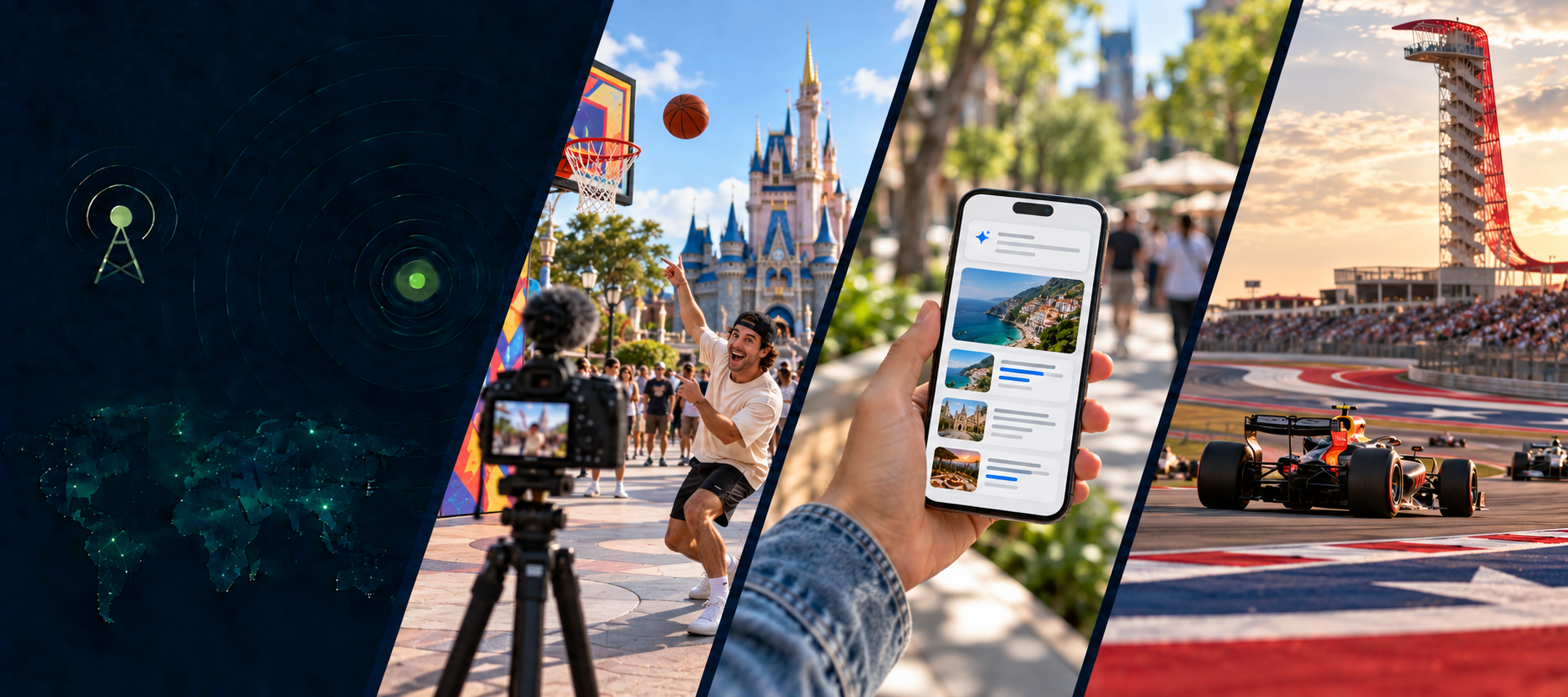
This week on Travel Signals, Disney is building around a creator’s established appeal. Google is making sources more visible inside AI answers. And Apple Maps is helping visitors find their way through one of Austin’s biggest weekends.
October 19, 2026

What a hometown concert, a marathon, and nearly 200,000 event attendees can teach us about what makes a destination worth visiting. On a moonlit Saturday evening, cool fall air chilled the 102,000 fans waiting for Twenty One Pilots to begin their largest and longest show to date. Suddenly, Ohio Stadium exploded in a wash of red as every screen and every [...]
October 15, 2026

The future of travel marketing isn't about creating more content. It's about creating something AI can't reproduce without you. There is a fundamental problem emerging in travel marketing, and it has very little to do with whether you're using ChatGPT, Gemini, Claude, or whatever new AI product showed up while I was writing this sentence. The problem is that we have [...]

 Ad Choices