

What 90% AI Adoption Really Means for Marketers
When 90% of marketers use AI, it’s tempting to assume we’re witnessing the emergence of a massive competitive advantage.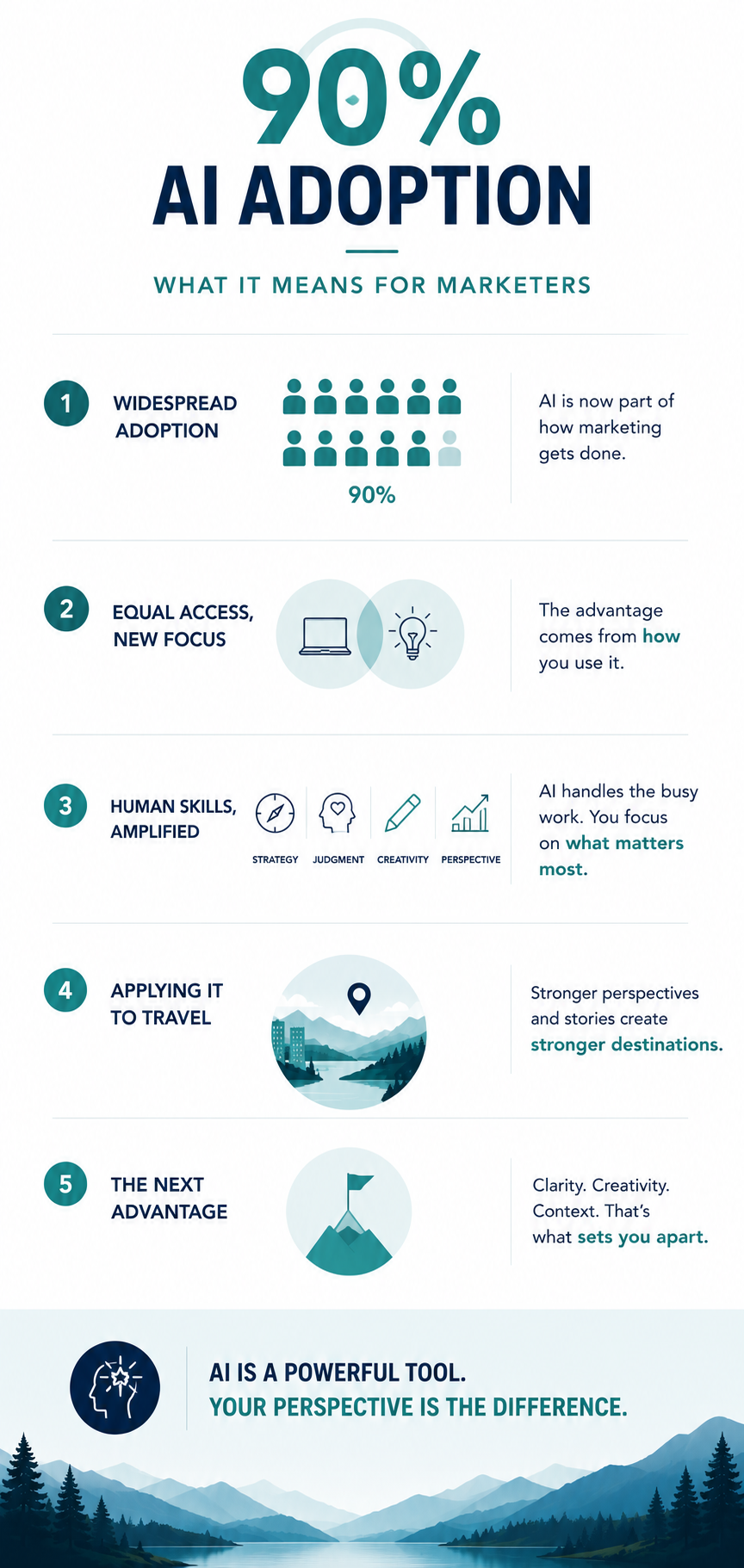
But when nearly everyone has access to the same tools, something interesting happens.
The advantage shifts.
High adoption isn’t a sign of winners. It’s a sign of maturity.
When a technology reaches widespread adoption, it usually stops being a differentiator and starts becoming part of the way work gets done.
We’ve seen this before.
Nobody built a lasting advantage around having email. Nobody won because they had a website. Nobody stood out because they used search engines or social media.
Those technologies eventually became part of the background. Not exciting. Not optional. Just essential.
AI is following a similar path.
For the last two years, marketers have debated whether AI matters. But the market has largely answered that question. When 90% of marketers are using AI in some form, the conversation changes.
The question isn’t whether to adopt AI.
It’s what happens next.
Access isn’t the advantage anymore.
Everyone has access to AI tools.
Everyone can generate content. Everyone can summarize research. Everyone can brainstorm campaign ideas or accelerate repetitive tasks.
Which means access itself is no longer the advantage.
The question shifts from who is using AI to who is using it better.
Two marketers can sit down with the exact same platform and produce completely different outcomes. One creates generic, forgettable work. Another uncovers insights, accelerates strategy, and creates more room for creative thinking.
The difference isn’t the technology.
It’s the thinking behind it.
The next advantage is human.
As AI becomes more accessible, uniquely human skills become even more valuable.
Strategy.
Judgment.
Institutional knowledge.
Original research.
Storytelling.
Knowing what questions to ask.
AI lowers the cost of production, but it doesn’t lower the value of perspective.
That’s where organizations will continue to differentiate themselves.
Not by using AI, but by combining AI with experience, creativity, and a clear point of view.
Why this matters for destination marketers
For destination marketers, the challenge isn’t simply adopting AI. Most organizations are already experimenting with it.
The challenge is understanding how AI fits into the larger work of building visibility, understanding travelers, and creating stories that earn attention.
Because if everyone has access to the same tools, the destinations that stand out won’t necessarily be the ones using AI the most.
They’ll be the ones with the clearest perspective and the strongest stories.
AI isn’t the story anymore.
What people build with it is.
AI is quickly becoming part of how marketing gets done. The more interesting question is what comes next.
We explored that question in a recent episode of Field Notes, where we unpack what 90% AI adoption really means and why the next competitive advantage won’t come from access alone.
🎙️ Listen to the episode:
If you’re thinking through what AI means for your destination, we’d love to continue the conversation. Connect with the Advance Travel & Tourism team to explore how changing traveler behavior and emerging technologies are reshaping visibility.
Learn more about how we can help you adapt to the evolving marketing landscape and ramp up your efforts.
October 22, 2026
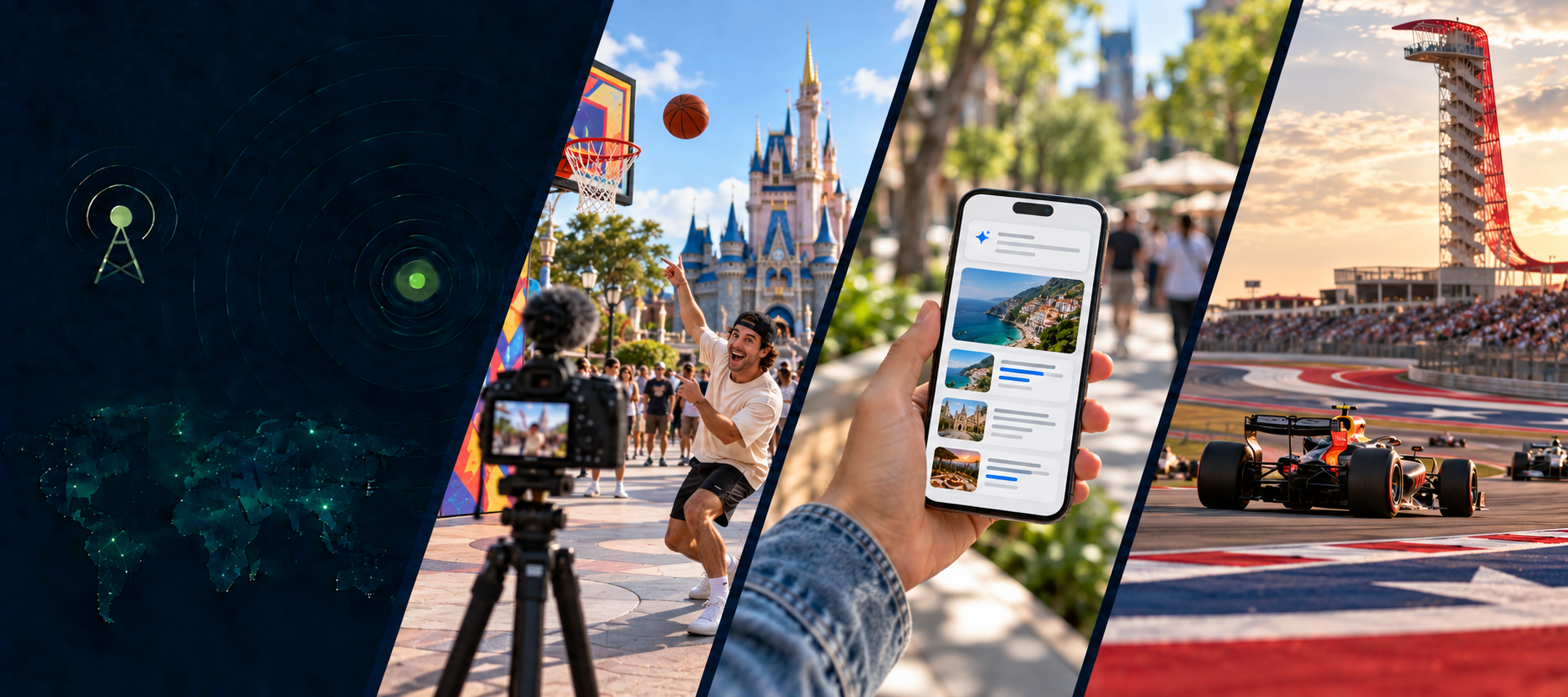
This week on Travel Signals, Disney is building around a creator’s established appeal. Google is making sources more visible inside AI answers. And Apple Maps is helping visitors find their way through one of Austin’s biggest weekends.
October 19, 2026

What a hometown concert, a marathon, and nearly 200,000 event attendees can teach us about what makes a destination worth visiting. On a moonlit Saturday evening, cool fall air chilled the 102,000 fans waiting for Twenty One Pilots to begin their largest and longest show to date. Suddenly, Ohio Stadium exploded in a wash of red as every screen and every [...]
October 15, 2026

The future of travel marketing isn't about creating more content. It's about creating something AI can't reproduce without you. There is a fundamental problem emerging in travel marketing, and it has very little to do with whether you're using ChatGPT, Gemini, Claude, or whatever new AI product showed up while I was writing this sentence. The problem is that we have [...]

 Ad Choices