

The Traveler Journey Is Getting Shorter—Here’s What That Means
What used to take multiple searches, tabs, and comparisons is happening faster—and often within a single interaction.
A traveler can ask one question and get a structured answer that narrows options immediately. That changes how destinations enter consideration.
There’s less time between:
“I’m thinking about a trip” and “I’ve narrowed it down”
And that shorter window puts more pressure on how information shows up.
Content is being evaluated earlier. In some cases, before a website visit ever happens.
That doesn’t eliminate the role of owned channels. But it does change when and how they matter.
The implication is simple: The earlier your destination can be understood, the more likely it is to be included in that first layer of consideration.

AI for Travel 2.0 breaks down how this compression is happening—and what it means for visibility moving forward.
FILL OUT THE FORM BELOW TO DOWNLOAD THIS FREE RESOURCE
Learn more about how we can help you adapt to the evolving marketing landscape and ramp up your efforts.
October 22, 2026
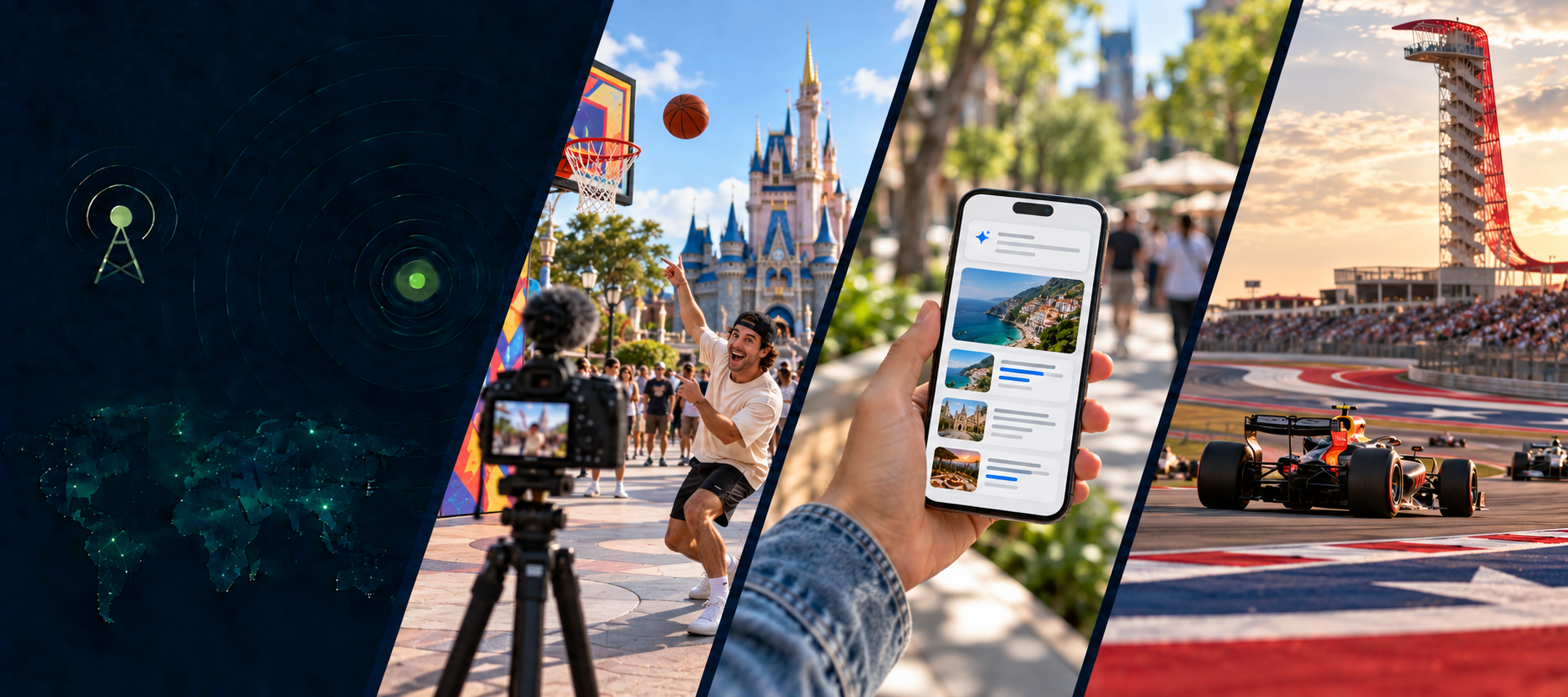
This week on Travel Signals, Disney is building around a creator’s established appeal. Google is making sources more visible inside AI answers. And Apple Maps is helping visitors find their way through one of Austin’s biggest weekends.
October 19, 2026

What a hometown concert, a marathon, and nearly 200,000 event attendees can teach us about what makes a destination worth visiting. On a moonlit Saturday evening, cool fall air chilled the 102,000 fans waiting for Twenty One Pilots to begin their largest and longest show to date. Suddenly, Ohio Stadium exploded in a wash of red as every screen and every [...]
October 15, 2026

The future of travel marketing isn't about creating more content. It's about creating something AI can't reproduce without you. There is a fundamental problem emerging in travel marketing, and it has very little to do with whether you're using ChatGPT, Gemini, Claude, or whatever new AI product showed up while I was writing this sentence. The problem is that we have [...]

 Ad Choices