

The Economic Impact of a Click
In the travel and tourism industry, a simple click can set off a chain reaction with significant economic implications. Whether it's clicking on an ad, a "book now" button, or a link to download a visitor guide, each click represents a potential transaction, a data point, and a step in the traveler's journey. Clicks are the currency of digital marketing in travel and tourism, but those clicks on their own don't mean anything to your local community. The actions that occur as a result of the clicks are where savvy DMO's are connecting the dots and the value.
So, how does a DMO calculate the value of all these clicks? It starts with understanding which clicks matter most and then what actions they lead to either on a website, or within a local community. Spoiler alert: the value of these actions are all over the board and not always easy to track.
A good starting point is to start where the money is. For most DMO's, this means lodging and hospitality taxes. So, ask yourself right now – what actions can a website visitor take that indicates they might be about to spend money at a hotel or local attraction? This might mean visiting a lodging page or building a multi-day itinerary on your website. The goal here is to figure out what you can measure that sends a signal of intent.
Now that you have a list of trackable actions, it's time to bust out your calculator. Welcome to the wonderful world of modeled data. To start, you need to have an idea of conversion rates for your online and in-destination visitors. The best way to do this is combining historical data from your website with visitor and tax data. This can be overwhelming, but start with one measurement, and work from there.
For example, you measure occupancy and daily rate for your DMO. What correlation might exist for your lodging page traffic and your occupancy? If you have 100 more visitors to your lodging page and you see an increase in hotel occupancy, you have something to work with here. If 100 visits to your lodging page correlates to 10 more bookings, you can now assume a 10% conversion rate. Take the value of an overnight visitor and create the formula.
100/10 x (value of an overnight visit) = Lodging page traffic economic impact.
Is this perfect? No. But today most attribution and reporting data is modeled out. You don't need a perfect model to have a valuable model. Now the challenge is, what else can you measure and model? Eventually you will start to show the value of your marketing to local community and business leaders.
Investing in destination marketing has far-reaching benefits beyond immediate revenue. Each marketing dollar spent can significantly impact the local community by creating jobs, generating tax revenue, and supporting local businesses. According to a study by the U.S. Travel Association, destination marketing not only attracts visitors but also supports broader economic development. Increased visitor spending translates into job creation in various sectors, including hospitality, retail, and transportation. This spending also generates substantial tax revenue, which can be reinvested into community services and infrastructure.
Tourism development enhances the quality of life for residents by supporting a broader range of amenities and cultural offerings. Effective destination marketing can also strengthen the community's overall image by attracting new talent and fostering economic growth. The challenge for DMO's is to connect their marketing campaigns to this economic development. By learning how to model your data and then build stories that matter to your stakeholders, you can be a real hero to the community.
Learn more about how we can help you adapt to the evolving marketing landscape and ramp up your efforts.
October 22, 2026
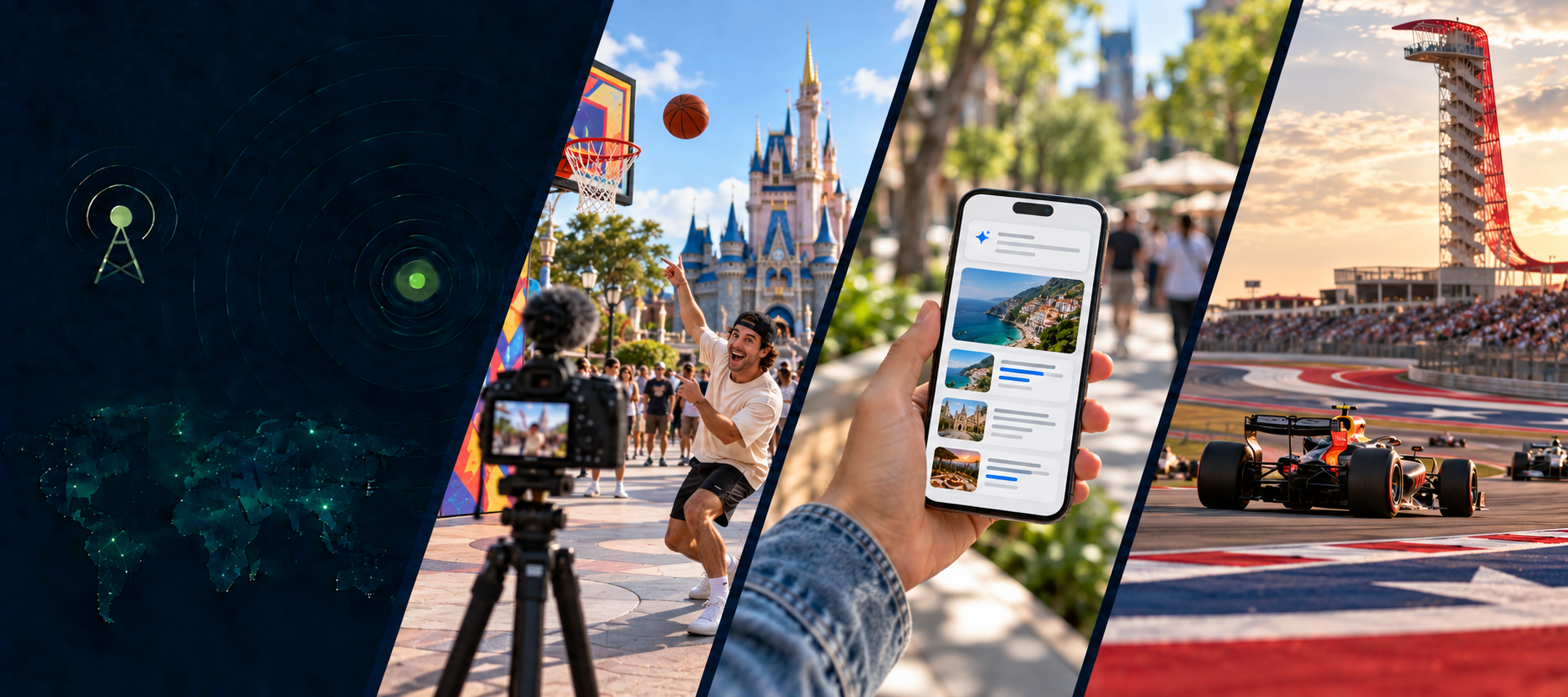
This week on Travel Signals, Disney is building around a creator’s established appeal. Google is making sources more visible inside AI answers. And Apple Maps is helping visitors find their way through one of Austin’s biggest weekends.
October 19, 2026

What a hometown concert, a marathon, and nearly 200,000 event attendees can teach us about what makes a destination worth visiting. On a moonlit Saturday evening, cool fall air chilled the 102,000 fans waiting for Twenty One Pilots to begin their largest and longest show to date. Suddenly, Ohio Stadium exploded in a wash of red as every screen and every [...]
October 15, 2026

The future of travel marketing isn't about creating more content. It's about creating something AI can't reproduce without you. There is a fundamental problem emerging in travel marketing, and it has very little to do with whether you're using ChatGPT, Gemini, Claude, or whatever new AI product showed up while I was writing this sentence. The problem is that we have [...]

 Ad Choices