

How to Make Your Traveler Data Work for You
Every destination collects some data about their travelers. Some have very sophisticated databases with names, addresses and purchase histories, but for most destinations, there’s not much more than an email list for travelers and prospects. Regardless of their sophistication, your destination can learn a lot about your travelers and prospects from these databases.
Emailing your travelers is a good way to stay in front of them with timely offers and enticing sales. But if you only know their name and email, how do you really know what they’re interested in or what deals will entice them? And, how can you get more information about them if you only have their name, address or email address?
With reverse email appends and a traveler profile report, you can turn your simple email lists into intelligence that will transform your marketing and unlock the secrets of what your travelers look like and what could motivate them to buy more from you. A profile report includes over 25 demographic variables like age, income, education level and number of kids and adults in the household. Along with demographics come home value, behavioral tendencies and top interests.
Putting Data Analysis into Action
Knowing more about your traveler base can help you make better decisions. You can use your customer data analysis to segment your travelers and prospects into distinct groups. Then, you can craft specific messages, ads and offers targeted directly to them that are much more effective than a one-size-fits-all marketing strategy.
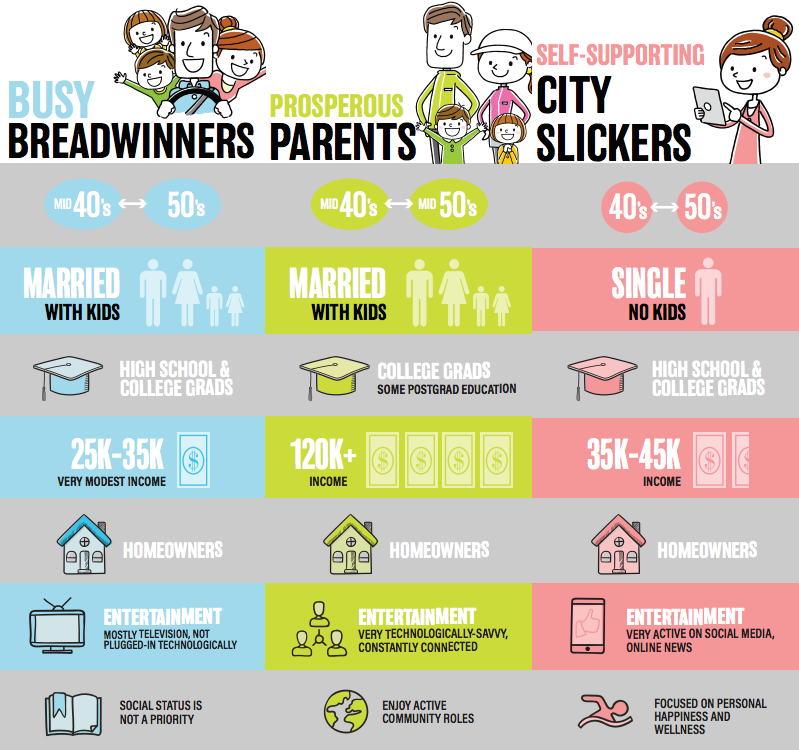
A strategy that only recognizes only one characteristic, like age doesn’t make sense. You have to dive deeper to understand how to speak to your travelers based on the way they live their lives and what they care about. Here are some examples of what the differences between 40’s and 50’s Gen-X’ers to young Boomers. If you had only one message to this group, you might not connect with them and move them to take action.
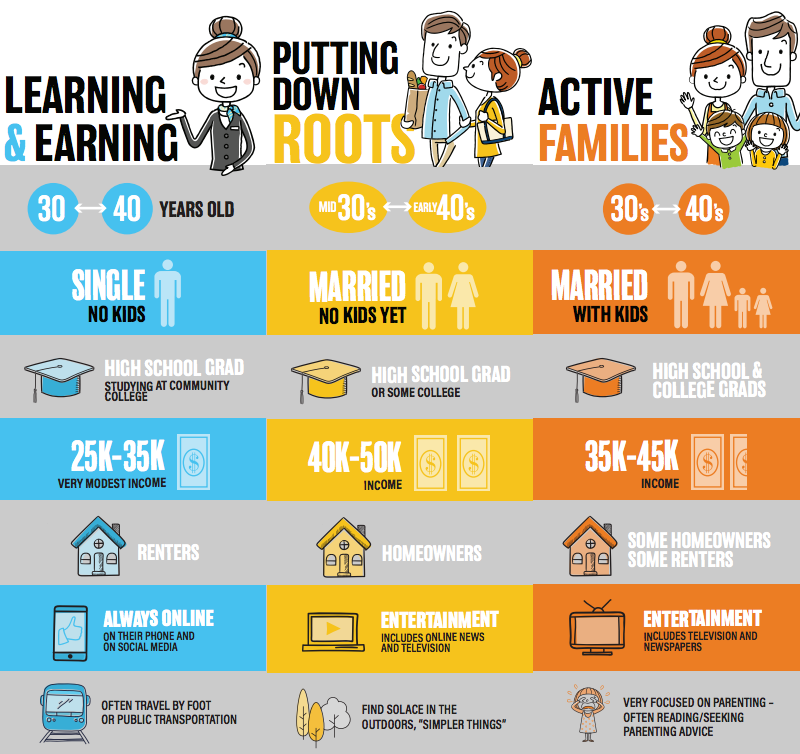
Here’s some examples of the differences that you could find in your 30’s-40’s older millennial and younger Gen-X customers.
Want to take your marketing to the next level? Talk to the folks doing your marketing. Challenge them to take a closer look at your marketing – or most importantly, at the way they are dividing up and targeting your marketing to your prospect and travelers.
Your marketing partners need to operate at this deeper strategic level. It’s not hard to understand, but it requires some data profiling that you might not have in house. A good partner can help you understand your market and identify the segments you should be going after. If you have customer databases – names, addresses, emails – then you can go even deeper by understanding behaviors and demographics that motivate them to spend. With this info you’ll quickly see who you’re doing a good job attracting and who you’re missing.
Segmentation isn’t the magic bullet, it’s the foundation for successful marketing. You must know who your travelers are before you can think about how to reach them and what to say to get them in the door.
Learn more about how we can help you adapt to the evolving marketing landscape and ramp up your efforts.
October 15, 2026

The future of travel marketing isn't about creating more content. It's about creating something AI can't reproduce without you. There is a fundamental problem emerging in travel marketing, and it has very little to do with whether you're using ChatGPT, Gemini, Claude, or whatever new AI product showed up while I was writing this sentence. The problem is that we have [...]
October 15, 2026

The future of destination marketing isn't simply about being discovered. It's about becoming a destination that travelers, and the AI systems helping them, can trust. Imagine planning the perfect family vacation. You want hiking trails with spectacular views, restaurants worth traveling for, beautiful beaches, and enough activities to entertain the kids. Maybe there's skiing in the winter, incredible shopping, and a quiet [...]
October 14, 2026

Earlier this week, I taught a graduate class on effective communication at the University of Michigan. I brought four stories I have used in keynotes and, after telling each one, broke down what made it work. Where did the audience become curious? Which detail carried the idea? What changed in the way they understood the subject? The question underneath all of [...]

 Ad Choices