

Travel Signals: Search Gets Competitive, Disruption Becomes Content and Gen Z Goes Offline
Travel Signals: Search Gets Competitive, Disruption Becomes Content and Gen Z Goes Offline
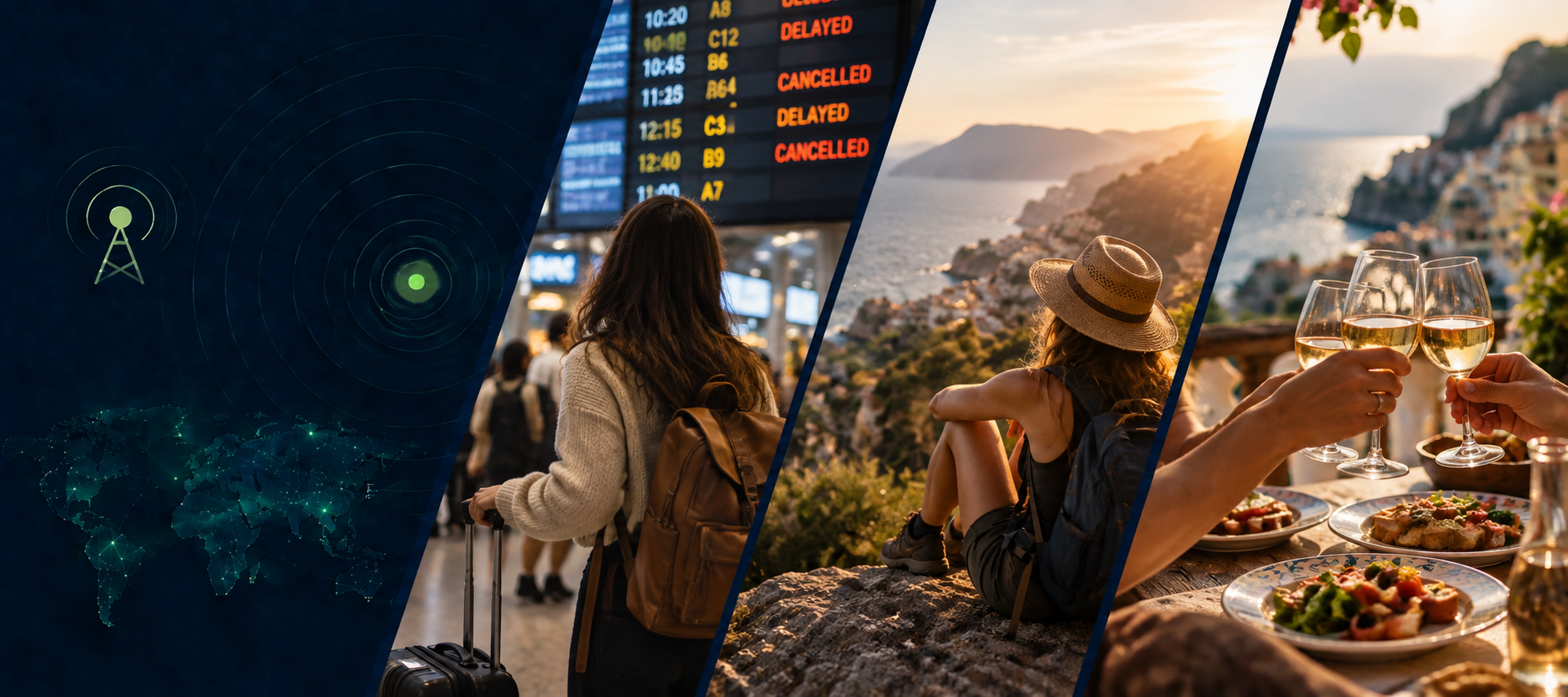
Travel marketing is becoming more digital at the exact moment travelers are craving something more real.
This week, TikTok put a price tag on the top of its search results. A communications failure disrupted thousands of flights across the Northeast. And new research suggests Gen Z is increasingly interested in experiences that pull them away from their screens.
Three very different stories. Together, they point to a travel journey increasingly shaped by technology, but ultimately judged by what happens in the real world.
TikTok puts the top search result up for sale
TikTok has spent the past several years becoming something more than a social platform. For many users, particularly younger ones, it’s also a search engine.
Now, that search behavior has a new advertising product attached to it.
TikTok recently launched TopSearch globally, allowing advertisers to bid for the top sponsored position when users search specific keywords.
For travel marketers, that’s worth watching because destination discovery on social is becoming increasingly intentional. Someone searching “best beaches in Florida” or “things to do in Nashville” isn’t simply scrolling for entertainment. They’re actively looking for an answer.
What it means for travel marketers
Social search strategy has largely focused on organic visibility: using the right language, answering real traveler questions and creating content that platforms can understand and surface.
Paid search may increasingly become part of that equation.
That doesn’t mean destinations should immediately start bidding on every travel-related TikTok search. It does mean marketers should understand which searches matter most to their destination and monitor how paid placements change the results travelers see.
Because once the top result can be purchased, visibility in social search becomes something marketers may need to defend as well as earn.
When the itinerary breaks, travelers still need the destination
Thousands of travelers faced delays and cancellations across the Northeast this week after a telecommunications failure and accidentally severed backup fiber line disrupted air traffic.
For the aviation system, it was an infrastructure problem.
For travelers, it was suddenly a completely different trip.
Missed connections. Unexpected overnight stays. Extra meals. Changed arrival times. An additional day somewhere they weren’t expecting to be.
What it means for travel marketers
Most destination content is built for the trip that’s supposed to happen.
But travelers also need information when it doesn’t.
A visitor unexpectedly stuck overnight may need late-night dining. Someone arriving six hours late may need transportation information. A canceled flight might create an unplanned afternoon in a city someone expected to simply pass through.
That creates an opportunity to think about destination content less like a campaign calendar and more like traveler infrastructure.
Ask a simple question: What would someone need to know about our destination if their plans changed today?
Useful, searchable information about transportation, neighborhoods, opening hours, weather, accessibility and spontaneous things to do may never become your highest-performing social post. But at the right moment, it can become your most valuable content.
Gen Z wants experiences the screen can’t replace
For all the attention given to Gen Z’s digital habits, new research suggests something else is happening alongside them.
Recent PwC holiday research found 81% of Gen Z respondents are prioritizing in-person activities during the holidays, while 78% expressed interest in screen-free gifts. Nearly two-thirds said sharing a meal mattered more than receiving a present.
Live Nation research released around the same time found a similar appetite for real-world experiences, with 93% of fans saying they crave them.
The more life happens through screens, the more valuable experiences outside them may become.
What it means for travel marketers
Travel is uniquely positioned here.
Destinations still need TikTok. They need search. They need AI visibility. They need digital content capable of earning attention in crowded feeds.
But the product they’re selling exists outside all of them.
The opportunity is to make that distinction clearer.
Instead of asking only whether an experience will look good on social, ask what someone can only understand by actually being there.
The sound of a neighborhood. The energy inside a stadium. The meal you can’t recreate at home. The person you meet unexpectedly. The view that’s fundamentally different when it fills your field of vision instead of six inches of glass.
The screen can create desire. The destination still has to deliver something the screen can’t.
The Bigger Picture
These three stories capture an interesting tension in modern travel.
The journey toward a destination is becoming increasingly digital. Algorithms determine what gets surfaced. Search results can be purchased. Travelers depend on real-time information when plans change.
But the reason people travel remains stubbornly physical.
That means destination marketers have two jobs at once:
Be exceptionally easy to find in digital environments. And give people something worth leaving those environments for.
The strongest destination marketing will understand both sides of the journey: how people find the experience and why experiencing it in person is still worth the trip.
Learn more about how we can help you adapt to the evolving marketing landscape and ramp up your efforts.
September 22, 2026
Travel Signals: Search Gets Competitive, Disruption Becomes Content and Gen Z Goes Offline Travel marketing is becoming more digital at the exact moment travelers are craving something more real. This week, TikTok put a price tag on the top of its search results. A communications failure disrupted thousands of flights across the Northeast. And new research suggests Gen Z is increasingly [...]
September 22, 2026

An economic impact report should be more than an annual announcement. It can become a year-round source of stories that shows residents, elected officials and industry partners how tourism moves through a community.
September 14, 2026
AI is reshaping travel marketing, from traveler discovery and non-commodity content to better prompts, paid AI advertising and emerging ChatGPT traffic.

 Ad Choices