

The Five Stages of Travel Haven’t Changed. How Travelers Move Through Them Has.
About a decade ago, we introduced the Five Stages of Travel as a framework for understanding how travelers move from Dream to Share. That framework still holds true today.
But the traveler has evolved. So it’s time to look at the Five Stages through a modern lens.
Today’s travelers are navigating economic uncertainty, an overwhelming number of destination choices, and more sources of inspiration than ever before. They’re discovering places through creators, search engines, AI, podcasts, newsletters, social media, and conversations with friends, often months before they’re ready to plan a trip.
The stages haven’t changed. The way people move through them has.
For destination marketers, that changes where influence happens.
Dream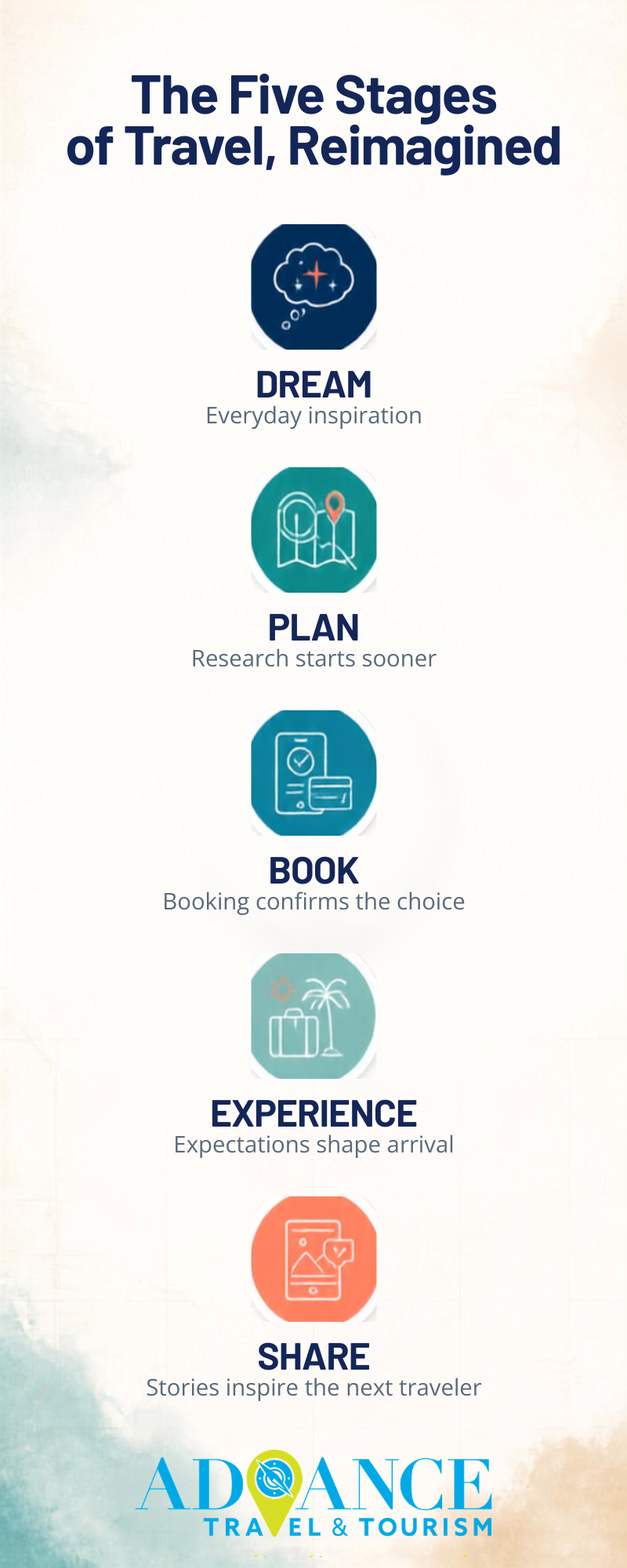
People still dream about travel. What’s changed is how often that dreaming happens.
It isn’t reserved for vacation planning anymore. It’s woven into everyday life.
A creator’s video. A friend’s vacation photos. A podcast recommendation. A destination that unexpectedly appears in an AI search. Inspiration arrives in small moments, every day.
Long before someone decides where to go, they’re already building a mental collection of places they’d love to visit.
The question isn’t whether travelers are dreaming. It’s whether your destination earns a place in those dreams.
Plan
Planning no longer begins with a blank slate.
By the time travelers actively start researching, they’ve often already saved destinations, watched videos, read reviews, and narrowed their options.
Planning has become more intentional because so much of the journey has already happened before someone opens a browser to compare destinations.
Travelers aren’t simply deciding where to go. They’re deciding where they want to spend one of their most valuable resources: their time.
Destinations that communicate a clear identity, tell memorable stories, and make that decision easier have an advantage.
Book
Booking often feels like the decision. Today, it’s more likely the confirmation.
By the time travelers reach the booking stage, weeks or even months of inspiration, research, and comparison have already shaped their choice.
The booking window may be short. The consideration window rarely is.
That’s why visibility throughout the Dream and Plan stages has become one of the greatest competitive advantages a destination can have. The shortlist is built long before someone clicks “Book.”
Experience
The destination experience doesn’t begin at arrival. It begins with expectation.
Every photo travelers have seen. Every story they’ve heard. Every recommendation they’ve saved. Every promise your marketing has made. Those moments shape how travelers experience a place before they ever set foot there.
When the experience delivers on that promise, memories become stronger because anticipation and reality align.
Share
Sharing has always been the final stage. Today, it’s also the beginning of someone else’s journey.
Photos, videos, reviews, recommendations, and stories don’t simply document a trip. They become inspiration for the next traveler.
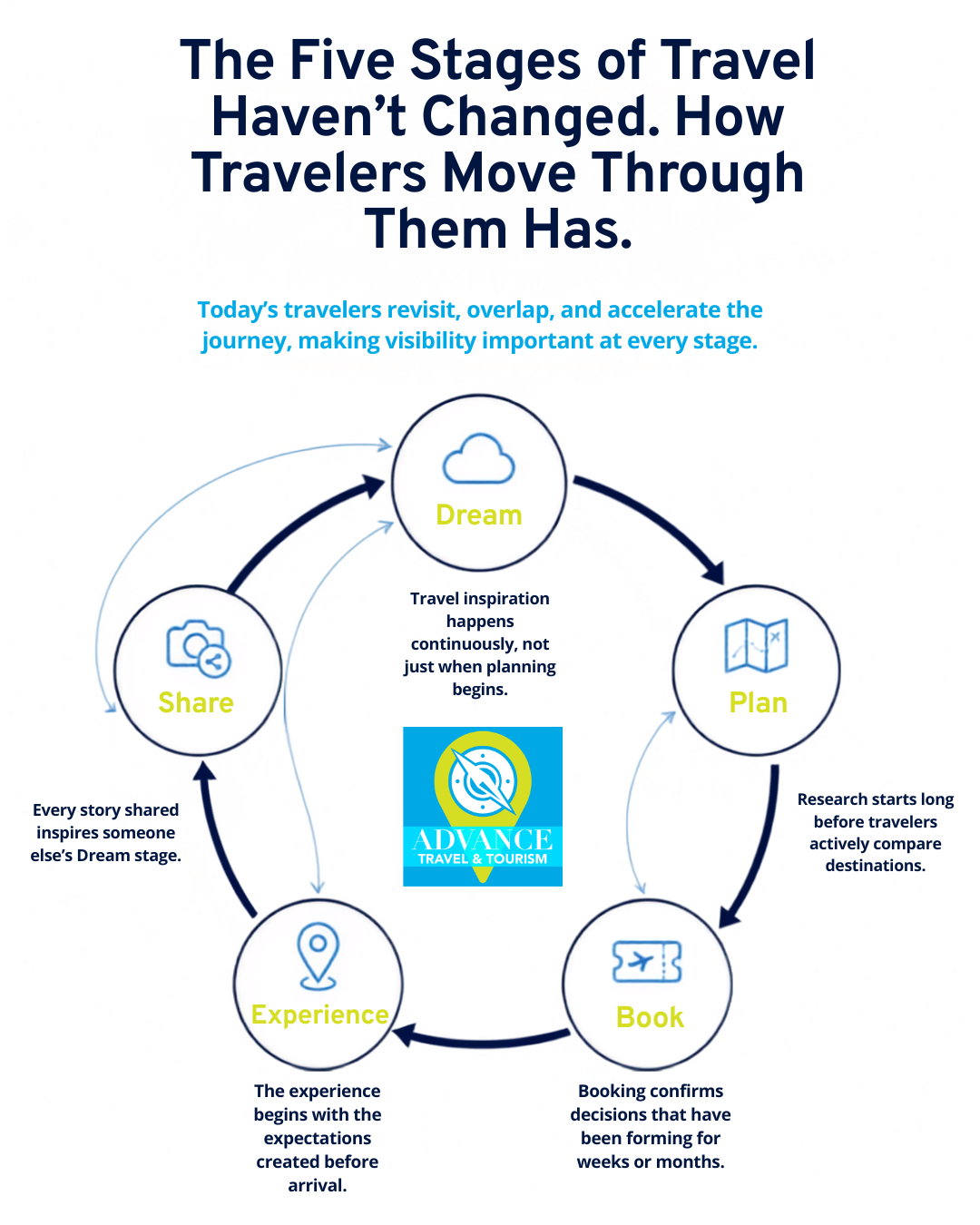
The Five Stages were never meant to be a funnel. They’ve always been a cycle. Today’s technology has simply accelerated that cycle, allowing one traveler’s experience to inspire countless new dreams almost instantly.
What this means for destination marketers
The Five Stages of Travel remain just as relevant today as they were when we first introduced the framework.
What’s changed isn’t the stages themselves. It’s how travelers move through them.
Dreaming happens continuously. Planning begins earlier. Booking confirms decisions that have been forming for weeks or months. Experiences begin before arrival. And every shared story has the power to inspire the next traveler.
Travelers also move between stages more fluidly than ever before. They revisit, overlap, and accelerate the journey as new sources of inspiration appear.
That means destination marketing can’t focus only on the moment someone begins planning. It has to build visibility long before planning starts. It has to create stories people remember. And it has to earn a place in the traveler’s mind before someone begins comparing hotel rates, airline schedules, or itineraries.
Because the destinations that consistently show up throughout the journey are the ones most likely to be remembered when the decision is finally made.The Five Stages of Travel haven’t changed.
The traveler has.
And understanding that difference is where the next opportunity begins.
Learn more about how we can help you adapt to the evolving marketing landscape and ramp up your efforts.
September 22, 2026
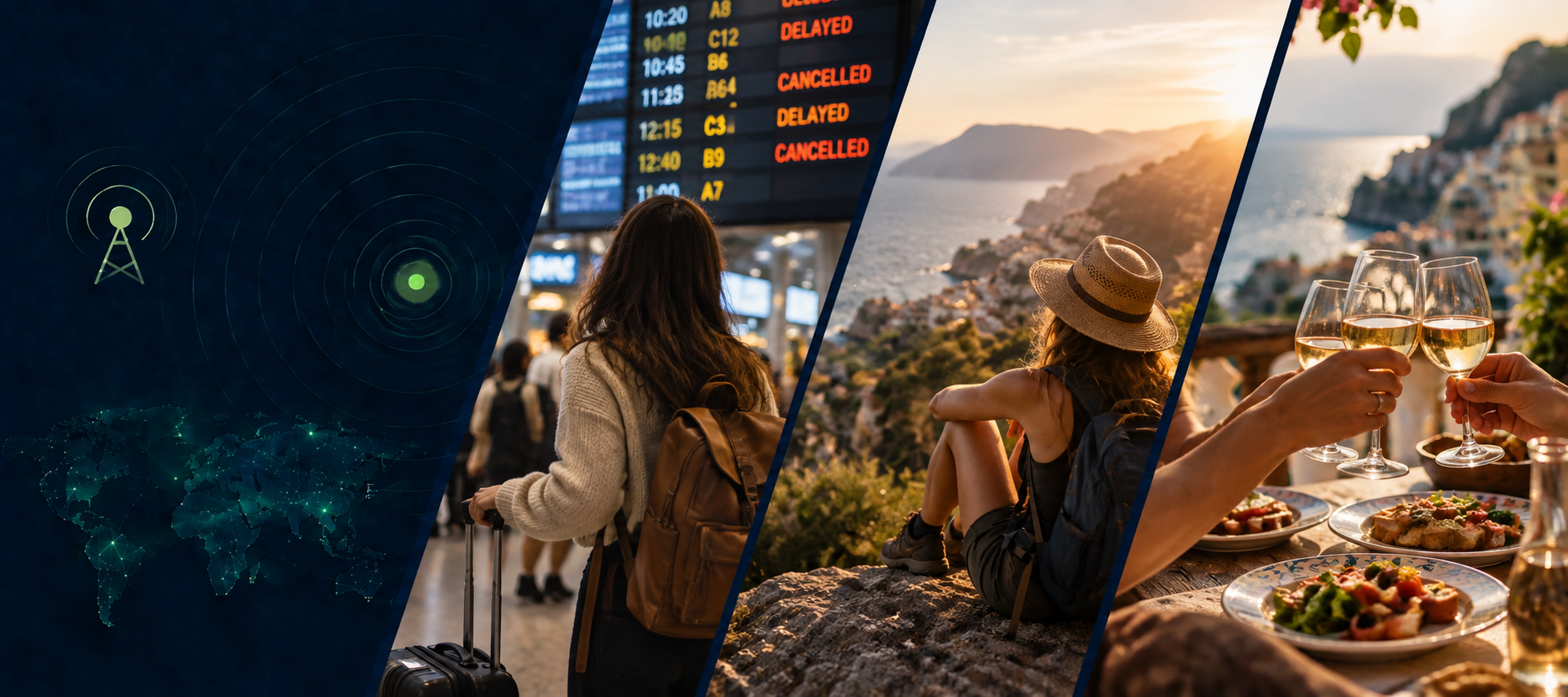
Travel Signals: Search Gets Competitive, Disruption Becomes Content and Gen Z Goes Offline Travel marketing is becoming more digital at the exact moment travelers are craving something more real. This week, TikTok put a price tag on the top of its search results. A communications failure disrupted thousands of flights across the Northeast. And new research suggests Gen Z is increasingly [...]
September 22, 2026
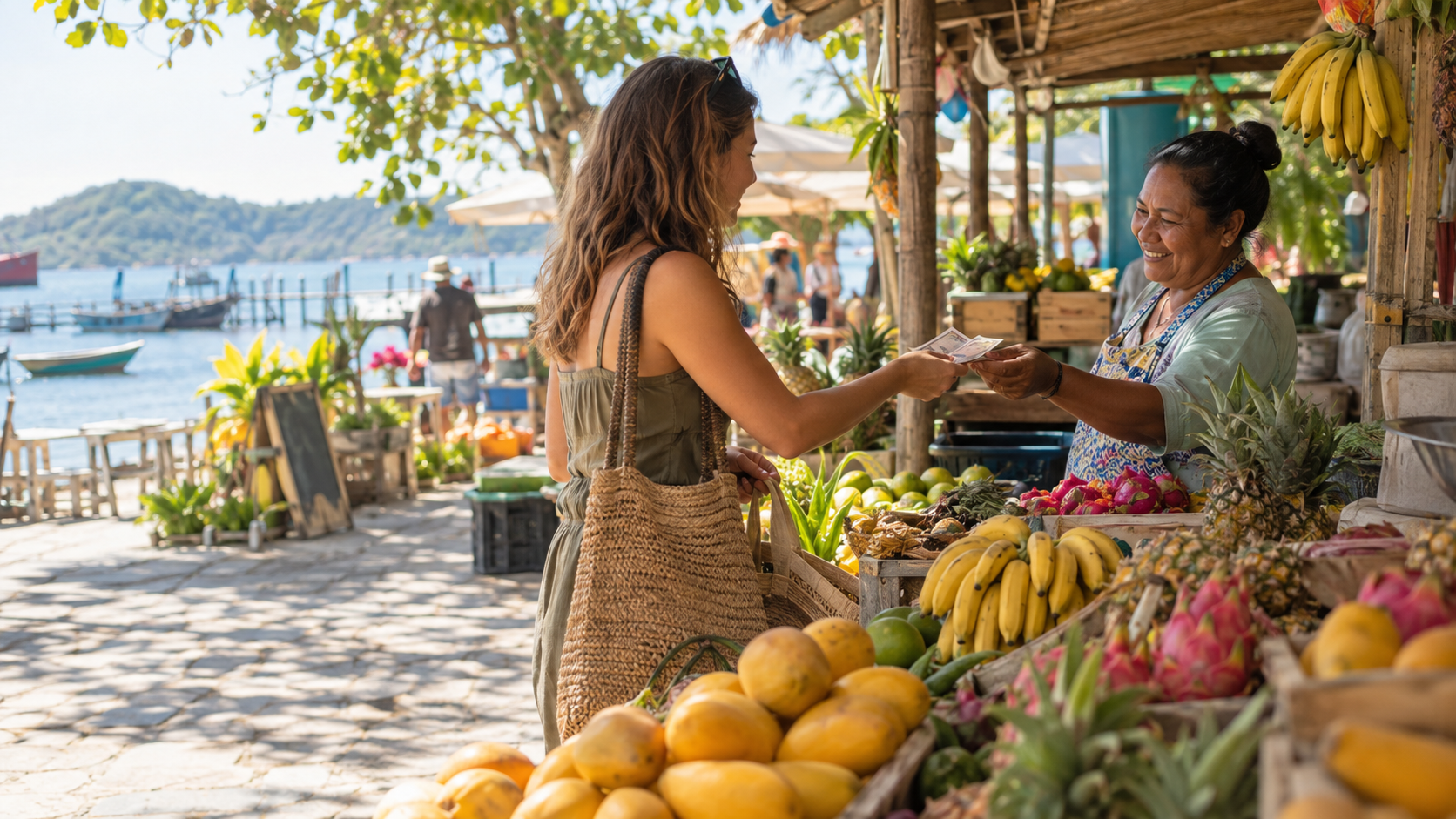
An economic impact report should be more than an annual announcement. It can become a year-round source of stories that shows residents, elected officials and industry partners how tourism moves through a community.
September 14, 2026
AI is reshaping travel marketing, from traveler discovery and non-commodity content to better prompts, paid AI advertising and emerging ChatGPT traffic.

 Ad Choices