

MILLENNIAL IS NOT A 4-LETTER WORD
The other day, a friend of mine was complaining that one of her clients still thought of her as a millennial. It wasn’t the label that bothered her, it was the stereotype. The client was attributing all the perceived negative attributes of the millennial generation to her – all because of her age. Sure she’s 24, single and walks into most meetings with a $5 latte, but diminishing her by sticking on a label cast aside who she really is: intelligent (more than most), hard-working, and successful with a decent amount of disposable income.
You’re probably reading this and thinking the same thing – what an injustice. Labeling people, stereotyping people, being dismissive – how crude. You’re right, but it’s how many companies and marketers execute their strategy, build their ads and write copy to speak to customers – stereotypes. I can’t count the times I hear “I need to reach millennials (or Gen-Xers or Boomers).” Of course, you do, but you need to go beyond broad stereotypes to be successful.
Lifestage segmentation is the method good marketers use to dive deeper. Instead of comparing basic demographics we look at behaviors, cultural influences and lifestyles to find smaller sub-sections of a market. Sound complicated? It’s not, it’s just the way life is. Take the real world example of my friend, the “millennial.” She’s 24, but she’s also a mom with a toddler. She’s successful – advancing quickly and earning more than 90% of her millennial peers. She has a mortgage, day care payments, a healthy retirement fund and an avid gardener. Now, let’s compare her to my other colleague, 25. He’s a recent college grad – took him a while to get through. Barista, single, rents housing, has two roommates, and thinks gardening is something his grandparents do to pass the time – in retirement.
Lifestage segmentation is the method good marketers use to dive deeper. Instead of comparing basic demographics we look at behaviors, cultural influences and lifestyles to find smaller sub-sections of a market.
Lifestage segments don’t always fit into the generational buckets we’ve created. The 24-year-old mom shops and spends like my 40-year old neighbor with a 4-year-old. So, if that’s your target, you need to target accordingly – and only focusing on age just won’t cut it. Segmentation works no matter who you’re trying to reach.
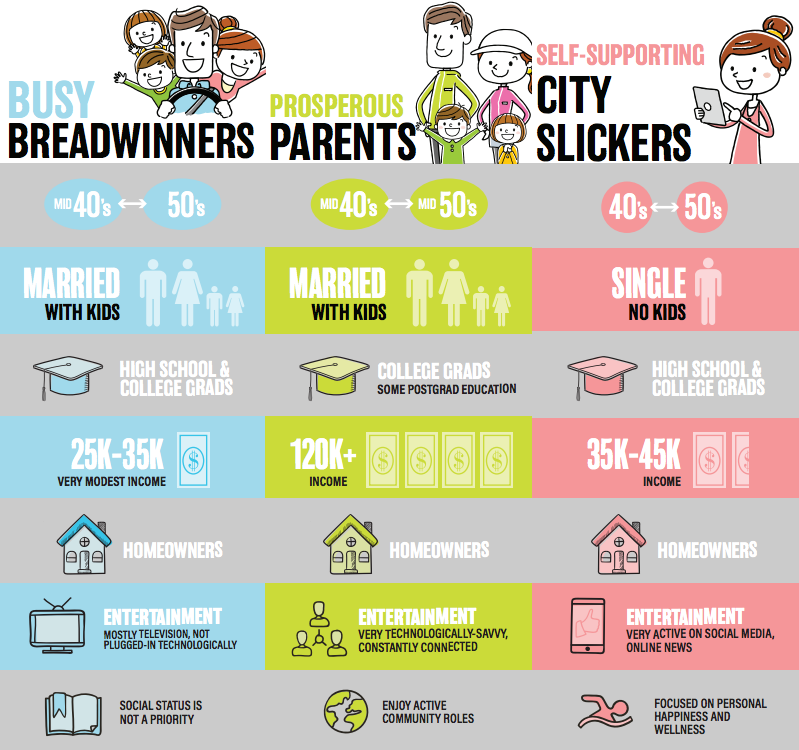
See how it works with some that span from Gen-X to Boomers.
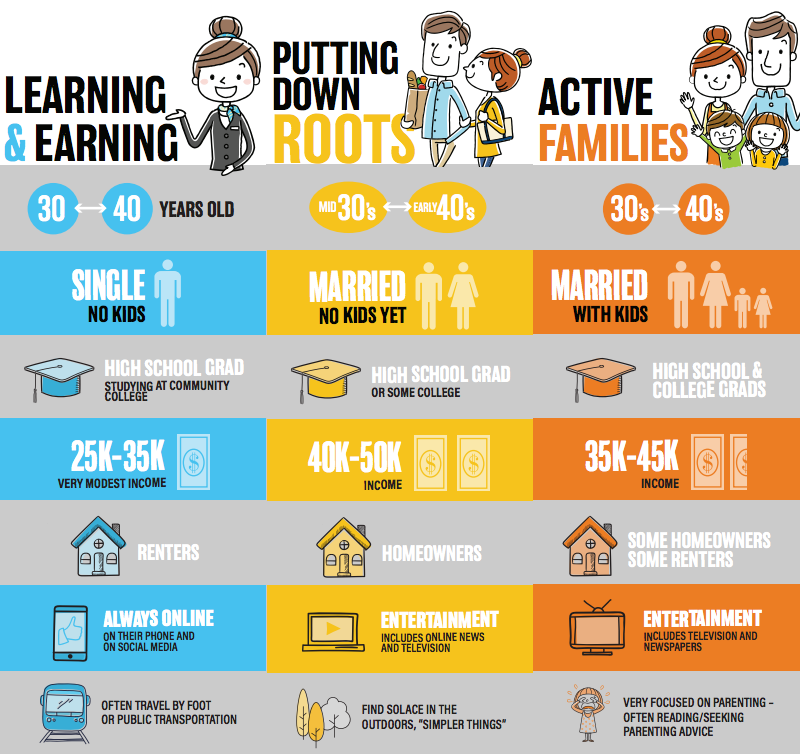
Here are some examples of younger adult segments.
Want to take your marketing to the next level? Talk to the folks doing your marketing. Challenge them to take a closer look at your marketing – or most importantly, at the way they are dividing up and targeting your marketing to your prospect and customers.
Your marketing partners need to operate at this deeper strategic level. It’s not hard to understand, but it’s not easy to do well. A good partner can help you understand your market and identify the segments you should be going after. If you have large customer databases – names, addresses, emails – then you can go even deeper by gaining spending, behavioral and demographic data. With this info you’ll quickly see who you’re doing a good job attracting and who you’re missing.
Segmentation isn’t the magic bullet, it’s the foundation for successful marketing. You must know who your customers are before you can think about how to reach them and what to say to get them in the door.
Contact us to learn about how we can help you reach the right audience for your destination.
Learn more about how we can help you adapt to the evolving marketing landscape and ramp up your efforts.
October 15, 2026

The future of destination marketing isn't simply about being discovered. It's about becoming a destination that travelers, and the AI systems helping them, can trust. Imagine planning the perfect family vacation. You want hiking trails with spectacular views, restaurants worth traveling for, beautiful beaches, and enough activities to entertain the kids. Maybe there's skiing in the winter, incredible shopping, and a quiet [...]
October 14, 2026

Earlier this week, I taught a graduate class on effective communication at the University of Michigan. I brought four stories I have used in keynotes and, after telling each one, broke down what made it work. Where did the audience become curious? Which detail carried the idea? What changed in the way they understood the subject? The question underneath all of [...]
October 9, 2026

This week, brands are borrowing from nightlife to earn a place in people’s calendars. Facebook and Instagram are testing feeds that put video first. And consumers are continuing to spend despite their frustration with the economy.

 Ad Choices